Humidity alone is not the main threat to a cubicle frame: condensation, chloride residue, trapped water and poor drying create the conditions that stain stainless steel and damage panel edges. By the end, you will know which material, fabrication, installation and cleaning details to verify before approving a cubicle for a wet restroom.
Key takeaways
- Control trapped chloride water, not humidity alone, to prevent pipe corrosion.
- Specify stainless steel by grade, finish and exposure—not by appearance alone.
- Use sealed laminate edges and sloped, dry floor junctions around panels.
- Approve the installation only after checking welds, fittings, seals and drainage.
What actually causes corrosion in a humid cubicle frame?
A cw ever popular ss pipe cubicle for humidity corrodes where chloride-bearing water stays trapped, not simply because the room has high relative humidity. Steam, wet floors, condensation, coastal air and weak ventilation leave salt from spray, sweat or cleaner residue on cold pipework and floor-level fittings.
The stainless surface depends on a thin chromium-oxide passive film. Clean, oxygenated conditions let that film repassivate after minor damage; stagnant liquid inside tube-to-fitting joints, floor sockets, concealed washers, drilled holes and pipe bases blocks recovery. Ventilation reduces condensation, but it cannot dry a water trap at the partition foot.
| Appearance or defect | What it indicates | What to do |
|---|---|---|
| Brown film on an exposed tube | Tea staining from chlorides, airborne salt, iron contamination or cleaning residue | Clean promptly and inspect the surface |
| Small dark pinholes or sharp pits | Localised pitting corrosion beneath a chloride deposit | Measure and investigate; cleaning alone may hide the damage |
| Attack inside a joint or socket | Crevice corrosion where oxygen-depleted liquid remains trapped | Open or inspect the joint and remove the moisture path |
| Thinning, perforation or a loose base | Structural section loss | Stop treating it as cosmetic; assess load capacity and repair |
“SS pipe” does not identify the alloy: confirm the grade for the cw ever popular ss pipe and its concealed hardware. Rust-free does not mean maintenance-free; repeated wiping, rinsing and drying still matter, especially near coastal air and wet floors.
Which stainless-steel grade and finish should you specify?
Specify SS 304 for a dry, well-ventilated interior restroom; choose SS 316 or 316L where chloride-bearing moisture comes from coastal air, frequent spray, wet cleaning or trapped condensation. A cw ever popular ss pipe frame still needs a confirmed alloy, because “SS pipe” identifies no grade.
| Grade | What it means | When it applies |
|---|---|---|
| SS 304 | Austenitic stainless steel suited to ordinary interior humidity; lower chloride resistance than 316 | Dry-to-humid restrooms with prompt cleaning and drainage |
| SS 316/316L | Contains molybdenum, improving resistance to chloride attack; still vulnerable to pitting and crevice corrosion | Coastal, heavily washed or persistently damp locations |
Ask a restroom cubicle supplier for the mill test certificate or alloy certificate, not a brochure claim. Confirm that pipes, hinges, brackets, feet, washers and fasteners are stainless; carbon steel, zinc-coated hardware and aluminium can rust or create galvanic corrosion at wet joints.
Brushed finishes hide fingerprints and minor marks; polished surfaces clean more easily but reveal scratches. Neither finish replaces passivation. Require weld heat tint removal or passivation, and reject brown heat-affected areas, pits or rust transfer from carbon-steel grinding tools.
Inspect every joint, including concealed washers, fastener heads, floor sockets and pipe bases:
- Tea staining: brown surface discoloration needing cleaning and investigation.
- Pits: pinholes indicating localized attack.
- Crevices: dark, wet gaps where corrosion can continue unseen.
- Floor connections: rust, standing water or untreated cut ends.
Specify compatible isolation and drainage where dissimilar metals meet.
How do 12 mm and 18 mm compact laminate panels behave around moisture?
For most humid toilet cubicle partition layouts, 12 mm solid-grade compact laminate is adequate for standard-height panels, while 18 mm is the safer choice for tall doors, wide leaves, heavy hardware or severe impact. Thickness alone does not make a bathroom partition moisture-proof.
| Panel thickness | 12 mm | 18 mm |
|---|---|---|
| Stiffness and impact | Lighter; adequate for normal spans | Stiffer; better for wide doors and hard use |
| Weight and drilling | Easier to carry and drill | Heavier; needs more handling effort and slower drilling |
| Hardware loading | Requires careful hinge spacing | Gives more material around fixings and reduces door sag |
| Edge durability and cost | Lower material and installation cost | Stronger edges; higher material, transport and installation cost |
A solid compact laminate core has resin and fibres throughout, so humidity cannot swell a hidden MDF, particleboard or honeycomb substrate. It can still fail locally at cut edges, drilled hinge holes, screw penetrations, damaged corners and the underside near wet floors.
Specify the details, not just “moisture-resistant”:
- State how edges are sawn, rounded, polished or otherwise machined.
- Require sealing of exposed edges where the design leaves them near spray or standing water.
- Define how oversized or damaged holes will be repaired rather than filled with an unapproved paste.
- Check hinge spacing, fixing depth and panel weight against door sag and pull-out loads.
A panel can perform well in humid service without every cut edge being waterproof. Choose 18 mm for stiffness and hardware loading, not as a substitute for edge protection, drainage or careful cleaning.
What floor and wall conditions prevent moisture from entering the system?
Completed waterproofing, a positive floor slope toward drains and zero standing water within the cubicle footprint are the minimum site conditions for reliable humidity performance. Treat the wall-to-floor splash zone with a defined, compatible waterproofing detail; do not rely on grout or filler applied after a bathroom partition is installed.
An uneven floor tilts feet and sockets, pulls doors out of alignment and creates water traps beneath panels. Level the support surface before fixing a toilet cubicle partition, then verify drainage by pouring water across the footprint.
| Support arrangement | Benefit | Site risk to control |
|---|---|---|
| Floor-mounted feet | Simple support and adjustment | Feet, sockets and anchors sit in the wettest zone and need sealed, drainable details |
| Overhead-supported components | Less floor hardware exposed to water | Ceiling or wall structure must carry the loads and resist movement |
Seal wall junctions and drilled anchors with a specified sealant compatible with the stainless steel, waterproofing system and panel material. Filler spread around a completed fixing can crack, trap water and conceal corrosion; it is not a substitute for a designed penetration detail.
Set the door’s underside gap high enough for cleaning tools and drainage, but not so high that spray remains against panel edges, sockets or fasteners. Exhaust ventilation and air movement reduce condensation where warm air meets cold pipes or walls. They cannot drain a wet floor or replace prompt drying.
How should you clean, inspect and approve the cubicle for humid service?
Remove standing water before it dries on the frame. For a CW Ever Popular SS Pipe Cubicle for humidity, wipe chloride film and cleaner residue from pipes, hinges, feet and concealed ledges; stainless steel fails first where residue remains trapped.
Use a compatible neutral detergent at the manufacturer’s stated dilution and contact time. Rinse with fresh water, then dry tube bases, floor sockets, hinges and joints. Never leave concentrated or warm hypochlorite to dry, and avoid hydrochloric acid, muriatic acid, abrasive powders and steel wool.
Use this approval and maintenance sequence:
- Request alloy certificates for pipes, hinges, brackets, feet and fasteners. Confirm compatible stainless components rather than carbon steel, zinc-coated hardware or aluminium.
- Inspect welds after fabrication. Require weld heat tint removal or passivation, with no grinding dust, brown staining or rough crevices.
- Check sealed panel edges, cut ends, drilled holes, concealed washers and tube-to-fitting joints. Look for early pitting around drilled fixings, especially beside wet floors.
- Verify that floor sockets sit clear of water traps and that the bathroom partition has no unsealed joint retaining spray or cleaning liquid.
- Record visual acceptance after fabrication, then repeat it at handover after installation and cleaning. Photograph defects and close them before occupancy.
A restroom cubicle supplier such as Cubicle World industries Pvt Ltd adds practical value by documenting grade, finish, edge treatment, installation details and the cleaning schedule instead of making only a generic moisture-resistance claim.
Related product
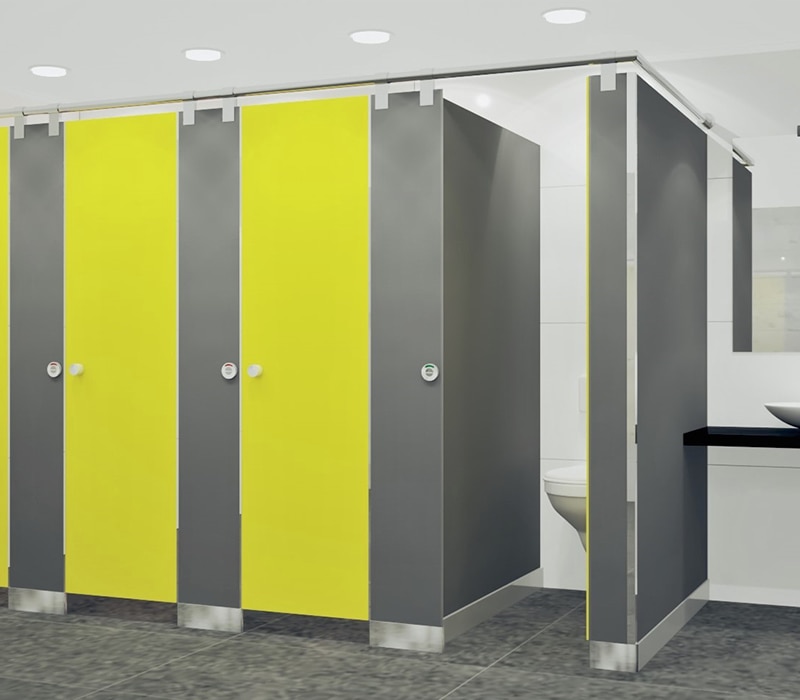 | Restroom Cubicles Simple yet contemporary is anonymous with CWP Ever Popular SS Pipe Evergreen. View product → |
Frequently asked questions
What actually causes corrosion in a humid cubicle frame?
Chloride-bearing water causes the main risk when spray, sweat, salt air or cleaner residue remains trapped on pipework, welds and floor-level fittings. Steam and condensation increase wetting, but high relative humidity alone does not explain corrosion.
Which stainless-steel grade and finish should you specify?
Match the grade to exposure: specify 304 stainless steel for ordinary indoor restroom conditions and consider 316 stainless steel where coastal air, salt spray or aggressive cleaning chemicals are present. Request a smooth finish with fully dressed welds and no crevices that retain water.
How do 12 mm and 18 mm compact laminate panels behave around moisture?
Both thicknesses resist routine wetting when their faces, edges and drilled openings are sealed. An 18 mm panel provides greater stiffness and impact resistance; 12 mm reduces weight but demands careful support, edge protection and hardware selection. Neither thickness fixes water entering an unsealed core or joint.
What floor and wall conditions prevent moisture from entering the system?
Install on a sound, level floor with working drainage, sealed wall junctions and no standing water around shoes or floor fittings. Keep panel edges above persistent wet zones, seal penetrations, and correct wall or floor movement before fixing the cubicle.
How should you clean, inspect and approve the cubicle for humid service?
Use a neutral cleaner, rinse away residue and dry pipework, fittings and panel edges. Inspect welds, concealed joints, fasteners, seals, laminate edges and floor drainage for staining, pitting, swelling or trapped water. Reject the installation until leaks, sharp edges, open joints and corrosion sites are corrected.