A humid room does not automatically require stainless steel pipe, and stainless steel does not make every cubicle detail corrosion-proof. By the end, you will be able to match the pipe grade, fabrication details, ventilation, drainage, finish and hardware to the actual wetting and chemical exposure in your facility.
Key takeaways
- Assess spray, condensation, standing water and chemicals—not humidity alone.
- Choose 304 for lower chloride exposure; choose 316 for salt and cleaning chemicals.
- Seal joints, protect feet and prevent water from pooling at floor junctions.
- Specify grade, finish, dimensions, weld quality and test documents before purchase.
Match the pipe to the exposure, not the humidity reading
Stainless steel pipe is a good choice for a restroom cubicle partition when the room dries reliably, but humidity alone does not prove it is the best material. Humid air differs from direct spray, persistent condensation, standing water and chemical contact.
304 stainless is commonly adequate in an ordinary interior washroom; shower rooms, swimming-pool changing areas, spas, coastal buildings, gyms, hospitals and poorly ventilated washrooms require checks on chloride exposure, drying time and cleaning chemicals.
| Option | Main advantage | Limitation or suitable use |
|---|---|---|
| Stainless pipe | Impact resistance, non-porous exposed faces and strong fire performance | Costs more, shows fingerprints and water marks, and reveals dents or scratches |
| Aluminium | Light and easy to handle | Less impact-tolerant; chloride and alkaline cleaners need review |
| Nylon | Corrosion-free and quiet | Lower rigidity and weaker fire performance |
| Powder-coated steel | Lower initial cost and colour choice | Scratches expose steel; trapped moisture can start rust |
| Stainless sheet framing | Flush, cleanable surfaces with fewer dirt traps | More material and fabrication cost |
| Compact phenolic laminate | Moisture-resistant, rigid panels | Edges and hardware still need protection |
| HDPE | Resists water and many chemicals | Scratches easily and has weaker fire performance |
For a toilet cubicle partition, choose stainless pipe where splash zones drain, exhaust removes moisture and staff can rinse cleaning residue. Reconsider it where floods, condensation or chloride-bearing bleach remain trapped.
A swimming pool, coastal changing room or shower area needs a chloride assessment; high humidity by itself does not justify the extra cost of 316. Loose water, salt deposits and dried chemicals can damage even stainless steel.
Choose 304 or 316 from the chloride risk
Specify 304 for many standard indoor commercial washrooms; high relative humidity alone does not justify 316. The deciding factor is chloride exposure combined with wetting and drying time. 316 contains molybdenum, giving a wider margin against chloride-induced pitting and crevice corrosion, but salt deposits, stagnant bleach solution and poor detailing can still attack it.
| Grade | Exposure decision | Why |
|---|---|---|
| 304 | Normally ventilated indoor washroom with controlled cleaners and reliable drying | Adequate for many ordinary commercial interiors |
| 316 | Chlorinated pool, coastal air, repeated shower wetting, sweat or urine contact, or chloride-bearing cleaners | Wider margin against chloride corrosion |
| Redesign or isolate | Standing water, persistent condensation or trapped chemical residue | Neither grade compensates for bad drainage and detailing |
For a commercial toilet cubicle partition or bathroom partition, apply the grade decision to every component: pipe, fasteners, brackets, anchors and concealed supports. Use compatible grades throughout, or isolate stainless steel from carbon steel, galvanized steel and aluminium with suitable non-absorbent barriers. A 304 pipe can develop rust staining from a carbon-steel fixing.
Prohibit prolonged hypochlorite contact. Do not allow bleach to dry in joints, around fastener heads or inside brackets; remove spills promptly, and rinse with clean water wherever chloride residue can remain. Clean salt, sweat, urine and chemical deposits before they concentrate in crevices.
If staff cannot rinse and dry the assembly, upgrade the maintenance plan before upgrading the steel grade.
Stop trapped moisture at joints, feet and floor junctions
A bright broad face does not prove a stainless frame is sound. Corrosion starts in wet, oxygen-starved crevices: tube-to-bracket joints, overlapping trims, folded edges, fastener heads, weld heat-affected zones, tube ends, pilaster bottoms, and floor-to-wall junctions. These details decide whether a toilet cubicle partition or bathroom partition survives repeated wash-down.
- Specify water-shedding joints and sealed hygienic tube ends. If drainage and ventilation inside the tube are necessary, engineer their locations; an improvised drilled hole becomes a dirt trap, while an unsealed hollow tube can retain wash-down water.
- Require clean welds, removal of heat tint and free iron, and post-fabrication cleaning, pickling or passivation where appropriate. Keep carbon-steel grinding dust away from the assembly.
- Set floor falls toward correctly placed drains, keep pipe feet out of standing water, and seal floor-to-wall junctions without creating a concealed ledge.
- Plan exhaust-air movement so wet surfaces dry, and prevent persistent condensation on cold metal. A humid room is manageable; a constantly wet joint is not.
- Inspect overlaps, brackets and anchors for gaps that hold chloride-bearing cleaner. Rinse residues with clean water where they can remain trapped.
Exposed round or square tubes, clamps, brackets and projecting fasteners add cleaning points compared with flush-faced construction. They collect soap, dust and splash, so joint count and geometry belong in the hygiene plan, not only the structural drawing. A bright tube can still conceal brown staining or local pitting at its feet.
Write a procurement specification that proves what you are buying
State the actual stainless grade in the purchase order; “stainless” alone proves nothing. Identify the tube as welded stainless-steel mechanical tubing to ASTM A554 where appropriate, and specify its dimensions, fabrication quality and intended appearance.
- Specify 304 or 316 grade, outside diameter, wall thickness, weld quality, and whether the tube is for exposed architectural service in a commercial toilet cubicle partition or restroom cubicle partition.
- Require a mill certificate naming the heat or batch number, stainless grade and applicable standard. On delivery, compare the tube marking and certificate with the purchase order before installation.
- Name the hardware grade, anchor material, bracket material and isolation-washer material. A 304 frame can develop rust staining when carbon-steel fixings or contaminated brackets touch it.
- Select the finish explicitly: No. 4 brushed, satin and mirror-polished are different finishes. Verify the supplied sample rather than assuming the label means a particular appearance.
- Approve a sample bay showing welds, joints, brackets, tube ends and floor connections. Check appearance and whether staff can clean every joint without trapped residue.
- Attach cleaning instructions: use a neutral stainless-steel cleaner, rinse chloride-bearing residue with clean water, dry water spots, and never leave bleach or hypochlorite solution to dry on the surface.
Smoother surfaces retain less contamination, while brushed finishes hide minor marks. No finish prevents water spots, fingerprints, scratches, weld discoloration or embedded iron; require post-fabrication cleaning and passivation where specified.
Make the final choice from room conditions and maintenance capacity
Choose 304 pipe for a normally ventilated, drained indoor washroom where cleaning is controlled. Move to 316 when chloride exposure repeats: pool chemicals, coastal air, shower spray, sweat, urine or chloride-bearing cleaners. Reconsider pipe framing if the room floods, condensation never clears or staff cannot rinse chemical residue.
| Option | Lifecycle burden | Practical check |
|---|---|---|
| Aluminium | Light, but can pit or stain around chlorides and dissimilar metals | Isolate fittings and inspect wet joints |
| Nylon | Resists corrosion, but carries lower impact and heat margins | Check load, fire and replacement requirements |
| Powder-coated steel | Lower initial cost, but scratches expose rust-prone steel | Repair chips before corrosion spreads |
| Pipe-framed stainless | Strong and non-porous, but joints collect deposits | Inspect clamps, welds, tube ends and feet |
| Sheet-framed stainless | Fewer exposed joints and easier wiping | Confirm folded edges, finish and floor junctions |
Turn the decision into a brief that requires drawings or a sample bay showing tube grade, finish, hardware, weld treatment, sealed or drained ends and floor connection. Require staff to remove deposits, dry splash zones and repair scratches; prohibit prolonged hypochlorite contact and rinse chloride residue with clean water.
Cubicle World industries Pvt Ltd can coordinate design, manufacture, supply and installation of a commercial toilet cubicle partition, restroom cubicle partition or bathroom partition, but retain exposure limits and acceptance checks in the contract. Stainless steel pipe is right when the grade matches the chlorides and the room design controls water, air movement and maintenance.
Related products
 | Restroom Cubicles Simple yet contemporary is anonymous with CWP Ever Popular SS Pipe Evergreen. View product → |
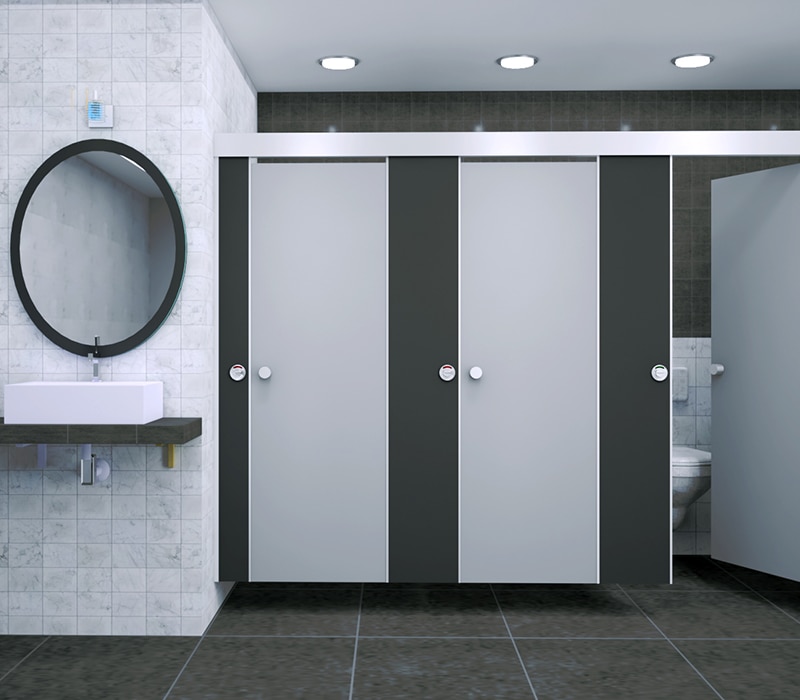 | Restroom Cubicles PRODUCT DESCRIPTION CW Floppy are tailor-made for restrooms. These cubicles have a clear floor concept which is very friendly as far as the... View product → |
Frequently asked questions
Does high humidity alone require stainless steel pipe for a cubicle partition?
No. Assess direct spray, persistent condensation, standing water and chemical contact because these exposures create greater corrosion risk than humid air alone.
Should you choose 304 or 316 stainless steel for a bathroom partition?
Choose 304 for lower chloride exposure. Choose 316 when the room faces salt contamination, coastal air or stronger chloride-containing cleaning chemicals.
Where does moisture cause problems in a toilet cubicle partition?
Inspect pipe joints, hollow sections, adjustable feet and floor junctions. Seal water-entry points and prevent standing water around the supports.
What should a procurement specification include for stainless steel pipe?
State the stainless steel grade, pipe dimensions, wall thickness, surface finish, weld requirements, joint construction and documents proving the supplied material.
Related products
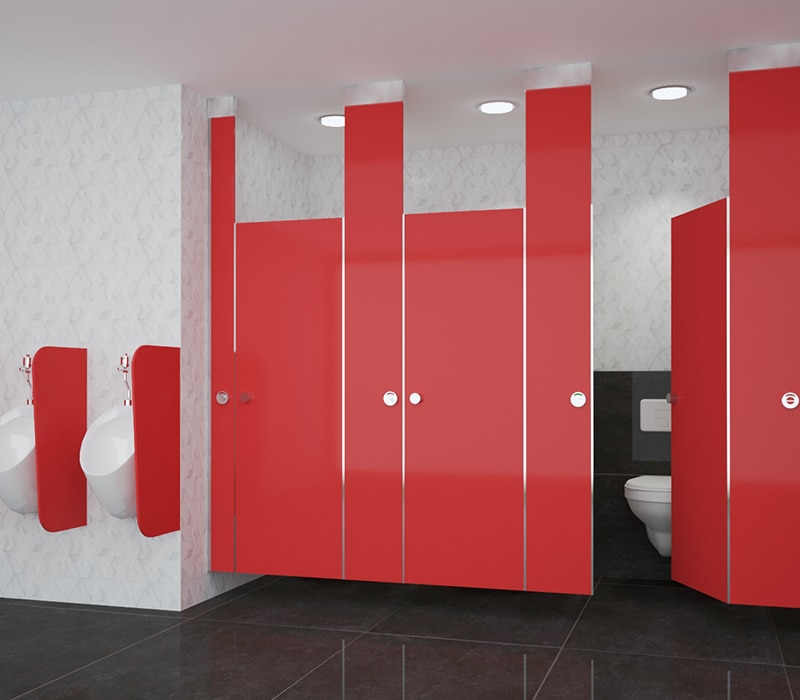 | Restroom Cubicles Add classic wings to your restrooms Innovation with simplicity and splendor, Greenlam Sturdo presents you Classique Wings, a sparkling new assortment... View product → |
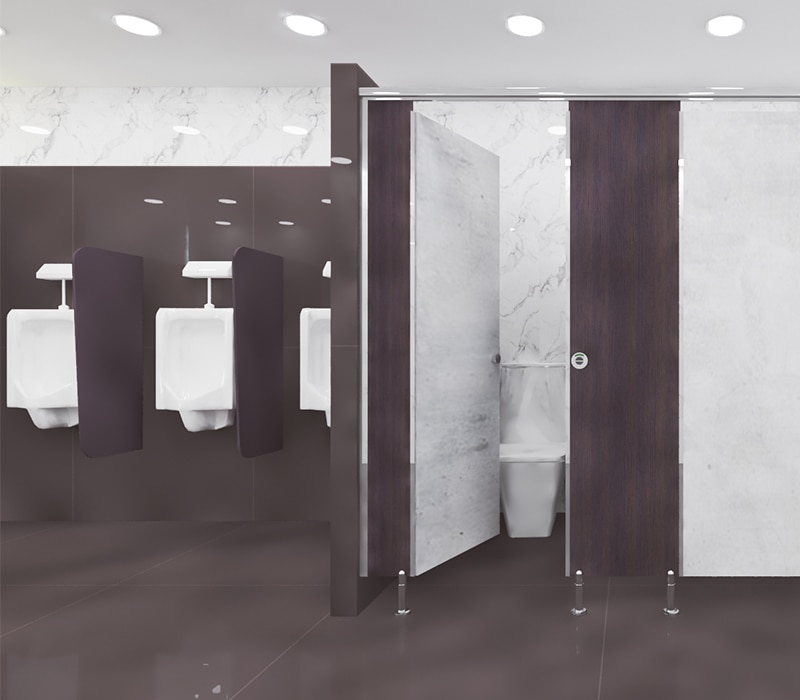 | Restroom Cubicles PRODUCT DESCRIPTION CW Leg Series in Stainless Steel variant is developed for providing higher endurance and spectacular design. View product → |
 | Restroom Cubicles Presenting serenity and simplicity at its finest, the CW shine Nylon series is the typical model for restroom cubicles which provide easy... View product → |
 | LOCKER ROOM CUBICLES Locker systems opens up a new generation of locker systems – a world of ultra-modern and exceptionally smart storage solutions made using Compact... View product → |